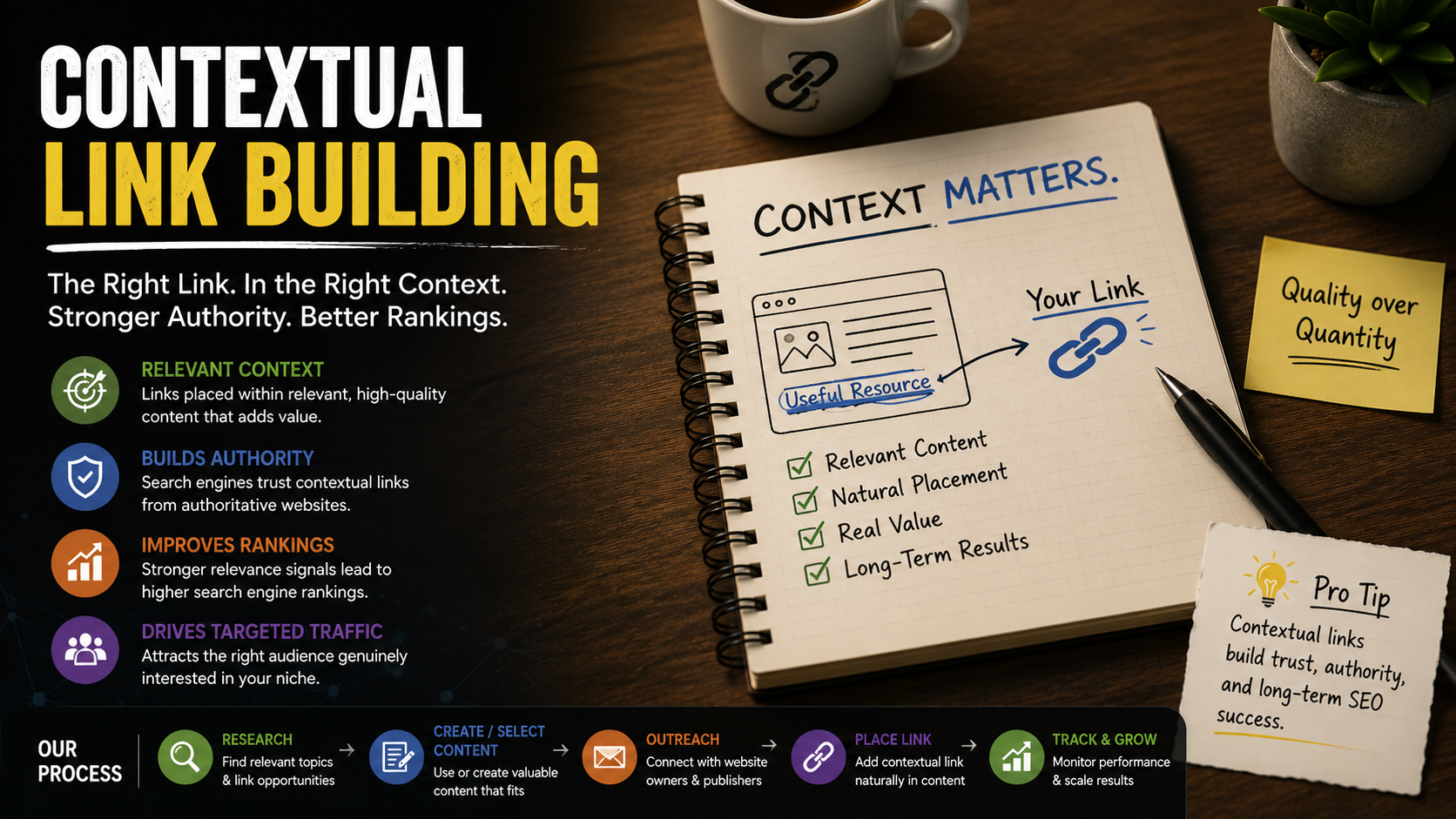
Contextual link building rewards patience and precision far more than it rewards speed or sheer volume, and understanding this distinction is one of the most important lessons for anyone serious about growing their website’s visibility. It is tempting to chase large numbers of backlinks quickly, but genuine contextual link building focuses on fewer, more meaningful placements that carry lasting value rather than a flood of low-quality links that can even work against you.
This article explores why quality matters so much more than quantity in contextual link building, how to recognize a genuinely valuable placement, and how to build a sustainable approach that protects your website’s long-term reputation.
Understanding What Makes a Link Truly Contextual
Contextual link building refers specifically to backlinks embedded naturally within relevant written content, surrounded by text that reinforces what the linked page is about. A link mentioned casually within a well-written paragraph about a related topic carries far more meaning to both readers and search engines than a link stuffed into an unrelated list or footer.
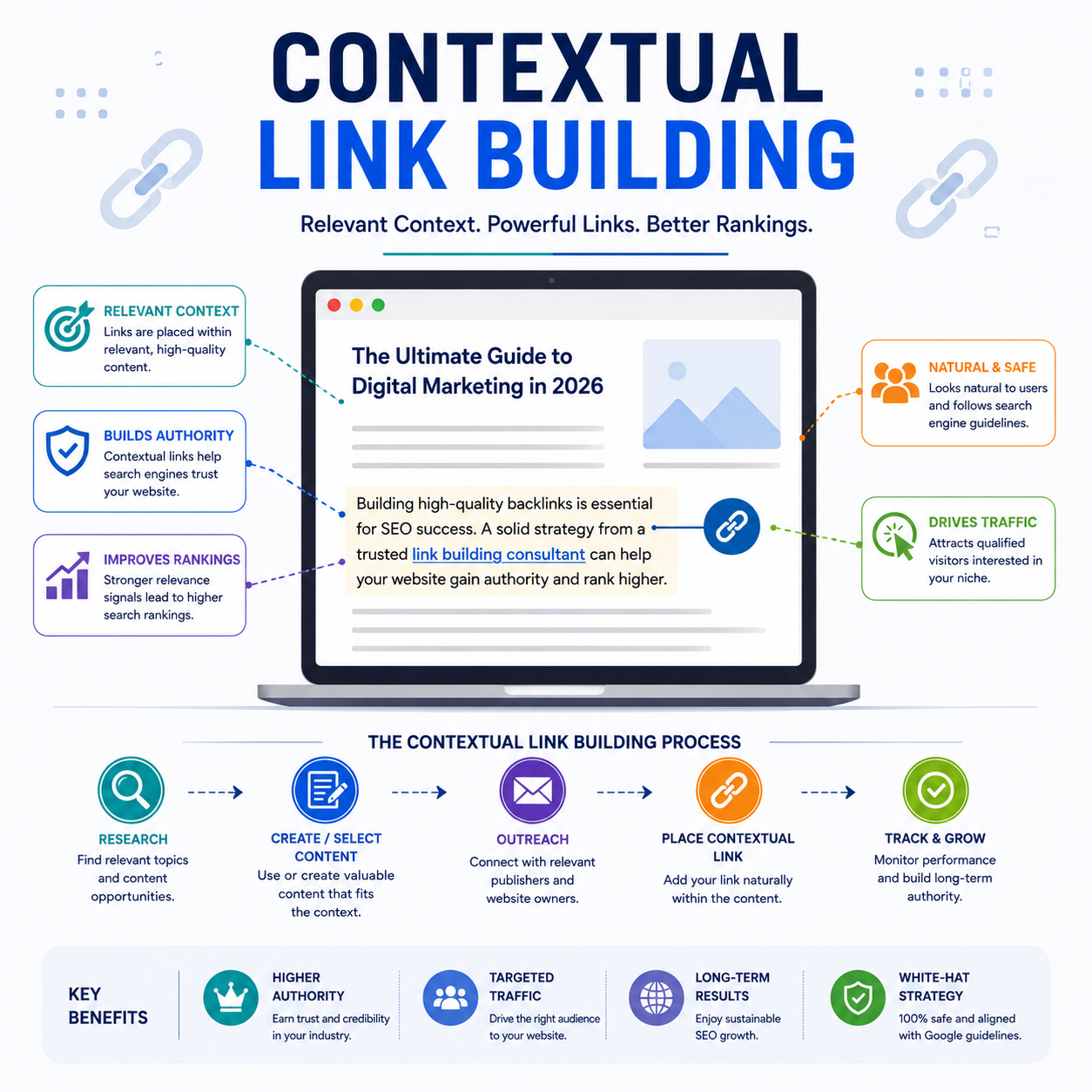
This distinction matters because search engines have become remarkably skilled at recognizing genuine, contextually relevant links versus artificial or manipulative ones. Contextual link building succeeds precisely because it mirrors how real writers naturally reference genuinely useful resources.
Why Chasing High Volume Often Backfires
Many website owners, eager for quick results, pursue as many backlinks as possible without considering relevance or quality. This approach frequently backfires, since a backlink profile filled with irrelevant, low-quality links can actually raise red flags with search engines rather than building genuine trust. Contextual link building takes the opposite approach entirely, prioritizing fewer links that are genuinely relevant, naturally placed, and sourced from websites with real editorial standards and real readers. This measured approach tends to produce far more stable, long-lasting ranking improvements.
Comparing High-Volume Link Building to Contextual Link Building
As this comparison shows, contextual link building consistently offers the strongest balance of safety and lasting value, even though it typically requires more time and effort per placement than high-volume alternatives.
| Approach | Typical Source | Long-Term Risk | Long-Term Value |
| Bulk Directory Submissions | Low-quality, automated directories | High risk of penalty | Very low |
| Purchased Link Packages | Private blog networks, link farms | Severe risk of penalty | Minimal, often temporary |
| Contextual Link Building | Genuine, relevant published content | Low risk when done properly | High, compounding over time |
| Comment Spam Links | Blog and forum comment sections | Moderate risk, usually ignored by search engines | Negligible |
How to Evaluate Whether a Potential Link Is Genuinely Valuable
Check the Relevance of the Surrounding Content
Before pursuing any placement, ask whether the surrounding article genuinely relates to your linked page’s topic. True contextual link building requires this relevance, since a link dropped into an unrelated article provides very little meaningful signal to search engines.
Verify the Site Has Real Traffic and Engagement
A website with no real visitors, regardless of how professional it looks, offers limited value for contextual link building purposes. Look for signs of genuine engagement, such as comments, social shares, or evidence of regular publishing activity.
Consider the Site’s Own Backlink Profile
A site that has itself earned genuine backlinks from other reputable sources is generally a stronger candidate for contextual link building than one with no discernible online presence or authority of its own.
Assess Editorial Standards
Publications that maintain genuine editorial oversight, reviewing and approving content before publication, tend to produce far more valuable contextual link building opportunities than sites that will publish virtually anything submitted to them.
Building a Sustainable Contextual Link Building Strategy
Rather than aiming for a specific number of links per month, a sustainable approach to contextual link building focuses on consistent, steady outreach toward genuinely relevant opportunities. This might mean securing only a handful of high-quality placements each month, but each one carries significantly more weight than a much larger number of low-quality alternatives.
Over time, this patient, quality-focused approach to contextual link building tends to produce a backlink profile that not only ranks well but also remains resilient during algorithm updates that frequently target manipulative, low-quality link patterns.
Signs Your Contextual Link Building Efforts Are on the Right Track
Look for gradual, steady improvements in relevant keyword rankings rather than sudden spikes, since natural growth tends to unfold incrementally. Genuine referral traffic arriving from the sites where you have secured placements is another strong indicator, since real readers clicking through a contextual link demonstrates that the placement was genuinely relevant to that audience.
If your contextual link building efforts are producing links that never generate any real referral traffic, it may be worth reconsidering whether those particular placements are genuinely relevant to your audience and topic.
How to Prioritize Opportunities When Time Is Limited
Most website owners cannot pursue every possible contextual link building opportunity at once, which makes prioritization important. Focus first on publications that are both genuinely relevant to your topic and demonstrably active, with recent content and visible engagement from real readers. These opportunities tend to offer the strongest return relative to the time invested compared to older or less active sites that may technically accept content but reach very few actual readers.
It also helps to prioritize pages that already rank reasonably well themselves, since a contextual link building placement on a page search engines already trust tends to pass along more value than one on a page that has never been indexed or noticed at all.
The Role of Content Freshness in Contextual Link Building Success
Publishers are generally far more willing to link to content that feels current and well-maintained. Regularly updating your most valuable pages, whether by adding new information, refreshing statistics, or expanding on outdated sections, keeps them attractive targets for ongoing contextual link building efforts. A page that clearly has not been touched in years is a much harder sell to a publisher than one that visibly reflects recent, accurate information.
This is one more reason a quality-focused approach to contextual link building naturally encourages better overall content maintenance, since the outreach process itself often reveals which pages need updating before they can realistically attract new, high-quality links.
Frequently Asked Questions
Is it ever acceptable to prioritize quantity in contextual link building?
Generally no. Even smaller numbers of genuinely relevant, well-placed contextual links tend to outperform larger volumes of low-quality, irrelevant ones, both in ranking impact and long-term safety.
How can I tell if a link building offer is genuinely contextual or just disguised bulk linking?
Ask specifically where and how the link will be placed. Genuine contextual link building involves a real, relevant article with the link embedded naturally within meaningful text, not a footer or unrelated list.
Does contextual link building cost more than bulk link packages?
Often yes, per individual link, since genuine placements require more research, writing, and relationship-building. However, the long-term value and safety typically make it a better investment overall.
How quickly should I expect results from a quality-focused contextual link building approach?
Most websites see gradual improvement over three to six months, with results continuing to compound as the overall backlink profile matures and strengthens further.
Can a website recover after previously chasing low-quality bulk links?
Yes, though it typically requires disavowing harmful links and shifting toward a genuine contextual link building approach going forward, with recovery timelines varying based on the severity of the previous issues.
Conclusion
Choosing quality over quantity is the defining principle behind effective contextual link building, and it remains one of the safest, most sustainable paths toward lasting search visibility. By focusing on genuinely relevant placements rather than chasing large numbers, website owners can build a backlink profile that not only performs well today but continues delivering value for years into the future.
To discover more insights and explore our full range of resources, we invite you to visit our official website.